Bulk-fixing stale prices in Shopify meta descriptions
26,558 of Rendezvous Cinema's Google snippets quoted a price it no longer charged. How 38,774 meta descriptions were rewritten safely across a live shop.
26,558 of 30,166 product meta descriptions quoting an out-of-date price, October 2026
The meta description is the line of text Google often shows under your page in search results. On Rendezvous Cinema’s shop, 26,558 of 30,166 product meta descriptions quoted a price. Nearly all of them were wrong.
How it happened
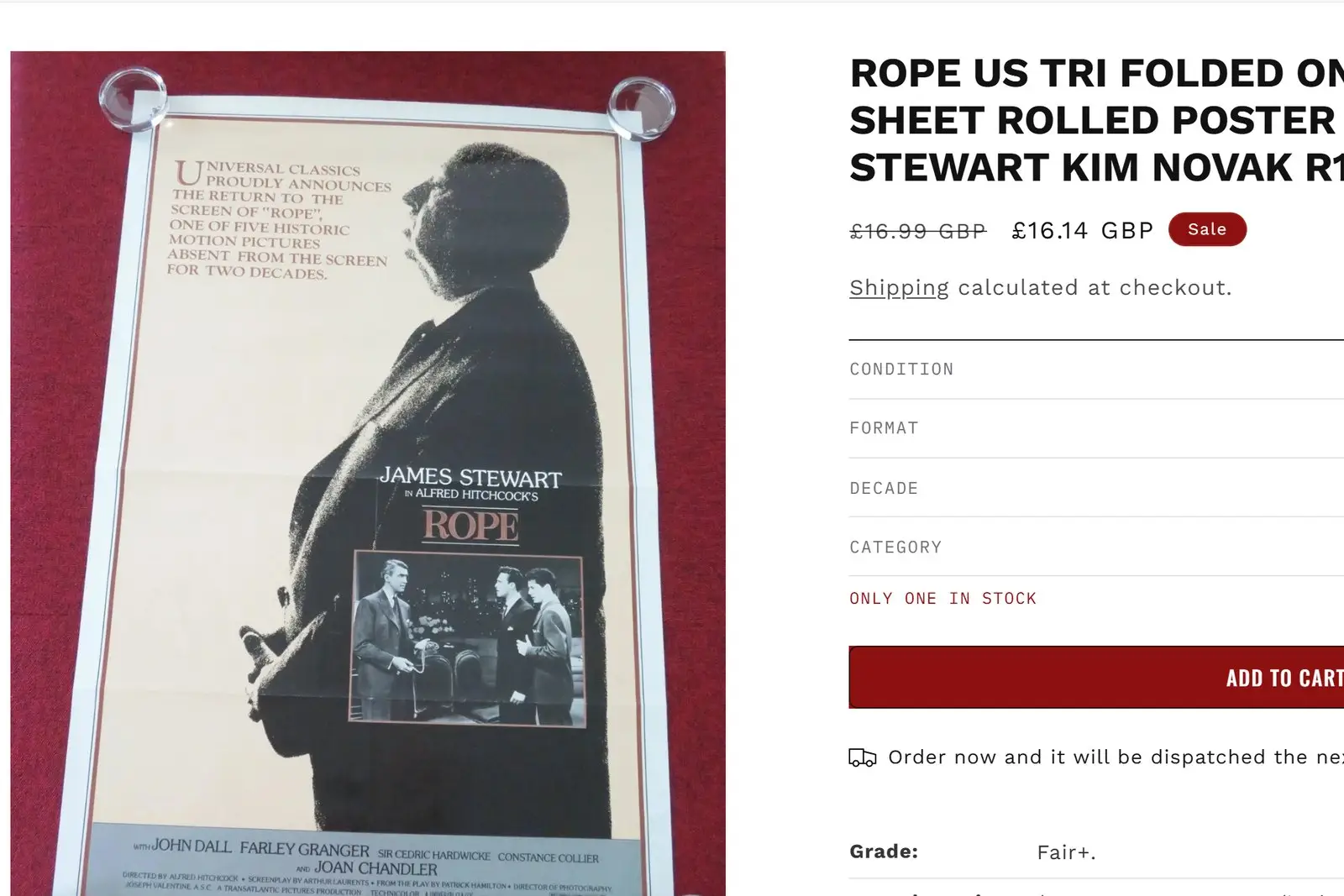
Every product had been given the same template: “Buy [title] for only £[price] at Rendezvous Cinema”. The price was written in once, when the product was created, and never updated. Prices then moved, as they do in a shop with 30,000 collectable posters, and the descriptions did not.
Of the 26,558 stale prices, 25,407 were higher than the real price. So in Google the shop looked dearer than it was, on most of its catalogue, in the one line a searcher reads before deciding whether to click.
Two more problems turned up in the same audit:
- 3,952 products had no meta description at all, so Google was left to pick text from the page. On most of them the text it found was an eBay template designer’s credit line, or a stock code.
- 18,551 product descriptions on the website talked about eBay: “buy but don’t pay”, “click the heart”, “via eBay”. They had been copied across from eBay listings and never cleaned.
The new format
Every meta description is now the title, then one sentence that is true for that item, under 160 characters:
- an original poster is described as an original, graded and photographed;
- a reproduction is never called an original;
- a disc is described as new or pre-owned;
- nothing claims free UK delivery, because the shop’s delivery policy does not offer it.
No price. A price written into text is out of date the first time the price changes. Google can read the live price from the product’s own structured data, which the shop keeps current, so the description does not need to carry it.
Writing 38,774 of them without breaking anything
Changing one field on 39,000 products sounds like a find and replace. On this shop it was not, and the reason is worth knowing if your Shopify store is connected to anything else.
Every change to a Shopify product sends a message back to Overlook, the system that runs Rendezvous’ listings on eBay, Amazon and AbeBooks. If Shopify says a product is archived and Overlook does not, that message withdraws it from the marketplaces. A bulk write to a product whose two records disagreed would quietly end a live eBay listing. There was one exactly like that in the catalogue: live in Overlook, archived in Shopify.
So the bulk job had a drift guard. Just before writing each product, it read it fresh from both systems and skipped any where the two disagreed. 717 were skipped and left for a separate reconcile job. Then:
- a pilot of five products, plus one deliberately mismatched product to prove the guard caught it;
- every old value saved before it was overwritten, so the whole run could be undone;
- the full run: 39,491 products, 38,774 written, 717 skipped, no errors, in under three hours.
Taking eBay off the website without taking it off eBay
The eBay wording was trickier, because the eBay listings needed it. So eBay’s own copy was saved first, on all 31,315 products with an eBay listing, and only then was the website description cleaned. 34,075 descriptions were cleaned and 594 skipped by the same drift guard. A scan afterwards found no website description still mentioning eBay, and every eBay listing still had its full copy.
What it changed
Search results now describe each item truthfully and never quote a price that might be wrong. The work went live on 19 and 20 October 2026. Google takes weeks to recrawl 30,000 pages, so it is too early to say what it has done to clicks, and I will not guess. I will add the figures from Search Console when there is a fair period to compare.
Checking your own shop
Search Google for site:yourshop.com and a product name you have repriced recently. If the snippet under it quotes the old price, the price is written into your meta descriptions, and every product you have ever repriced is probably the same.
If your shop is connected to a marketplace tool, an ERP or a stock system, do not fix it with a bulk editor until you know what each product save triggers on the other side.
If this sounds like your shop, a twenty minute call will tell us both whether it is worth fixing.
More like this in the articles, or see what technical seo involves.